
What Lab Testing Found Inside Creatine Gummies
Creatine gummies vs powder is not a taste question, it is a chemistry one. An independent HPLC testing program checked 12 top-selling creatine gummy brands, and the finding that matters is not about flavor. It is about whether the number on the label is in the package, and why a water-based gummy is a harder container to trust than a dry tub.
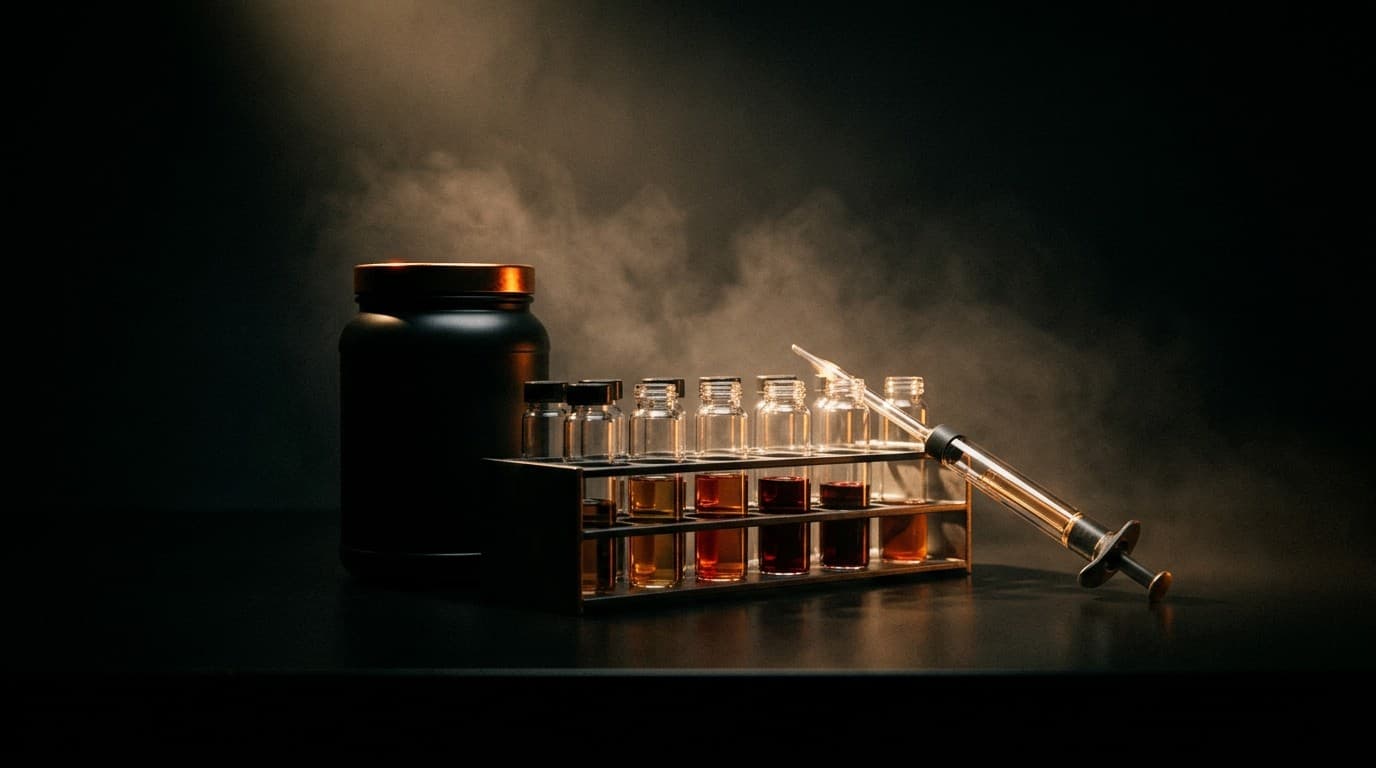
Creatine gummies versus powder is usually pitched as a convenience choice, but an independent testing program turned it into a chemistry question. A reputable manufacturer ran high-performance liquid chromatography (HPLC) on 12 top-selling creatine gummy brands against a creatine reference standard, and several of the products came back carrying creatinine, the breakdown product of creatine, while not meeting the creatine amount printed on the label. The format is the reason. A gummy is a water-based container, and creatine does not sit quietly in water.
Updated August 2026. Black Stallion is run by a family in Freehold, New Jersey, and our labels print every dose so the numbers can be checked. This article is about label accuracy and the chemistry of a supplement format. It is not a claim that gummies do or do not work, and it names no brands. The argument here is narrower and more useful than that: it is about whether what is on the label is in the package, on any format, and how you verify it yourself.
Why is a gummy a harder container than a tub?
A gummy is a harder container for an active ingredient than a dry powder because a gummy contains water, and water is what most stability problems need to get started. A tub of powder is a dry environment. Sealed, kept cool, and away from humidity, a dry crystalline active can sit stable for a long time, which is why the shelf life on a sealed powder is measured in years. A gummy is the opposite environment: it is a soft, chewable matrix that holds moisture by design, because that is what makes it a gummy and not a rock.
That moisture is not a defect in any one brand. It is the format. Any water-containing delivery system is a more chemically active place for an ingredient to live than a dry one, and an ingredient that reacts with water is going to have a harder time staying intact inside a gummy than inside a tub. Creatine is exactly that kind of ingredient.
Creatine, water, and creatinine: the reaction in one paragraph
Creatine converts to creatinine in the presence of water, and the reaction speeds up with heat and with acidity, both of which are common in a gummy. Creatine monohydrate is stable as a dry powder, but once it is in an aqueous environment it slowly cyclizes into creatinine, an inert breakdown product with no ergogenic value. This is textbook creatine chemistry and it is the reason the standard advice for powder has always been to mix your scoop and drink it, not to leave it sitting in water for hours. A gummy holds creatine in a moist, often mildly acidic matrix from the day it is made until the day you chew it, which can be many months. That is a long time for a water-sensitive molecule to sit in water.
This is why creatinine is the tell. When a testing lab finds creatinine inside a creatine product, it is looking at the footprint of that conversion. A product can be manufactured with the right amount of creatine and still test low on creatine and positive for creatinine later, because some of the creatine did what creatine does in water. The label number and the package contents drifted apart on the shelf.
What does an independent HPLC testing program check, and against what?
An independent HPLC program checks how much of the labeled active is actually present, measured against a reference standard of known concentration, and it can separate the intact active from its breakdown products. High-performance liquid chromatography separates the compounds in a sample and quantifies each one. Run a creatine product through it and you get two numbers that matter here: how much intact creatine is present, and how much creatinine is present alongside it.
The program that tested creatine gummies did exactly this across 12 top-selling brands, comparing each product to a creatine reference standard. The headline that traveled around the industry was the failure rate, and it was reported several different ways in the trade coverage, which is precisely why the number is not the point of this article. The finding that holds up regardless of how you count it is the mechanism: creatinine turned up inside gummy products, and some products did not carry the creatine their labels claimed. Whether you frame that as a count or a percentage, the chemistry underneath it is the same, and the chemistry is what you can actually use.
What does "label claim" mean, and how does a product miss it?
A label claim is the amount of an active a product states it delivers per serving, and a product misses it when independent testing finds materially less of that active in the package than the label promises. The claim is a promise. Testing is the audit. A product can miss its claim for several ordinary reasons, and none of them require bad intent:
- Under-formulation. Less active went in than the label says, whether by error or by cost-cutting.
- Degradation on the shelf. The right amount went in, but some of it converted to a breakdown product before the customer opened it. This is the creatine-to-creatinine story.
- Overage that was not enough. A maker adds a little extra to cover expected losses, but a water-based format lost more than the overage covered.
- Testing the wrong thing. A method that measures total creatine-plus-creatinine, rather than intact creatine only, can make a degraded product look compliant. This is why the method matters as much as the result.
The reason a dry, transparent powder is easier to trust on this axis is not that the company is more honest. It is that the format gives the molecule fewer ways to leave before you use it, and a printed single-ingredient dose gives you fewer places for a number to hide. That is the same logic behind why we refuse proprietary blends: a number you cannot see is a number you cannot check.
How do you read a certificate of analysis on any format?
A certificate of analysis (COA) is the testing lab's record of what one particular batch really held, and you read it by matching the tested active, the amount, the batch, and the date against the label in front of you. It is the single most useful document a supplement buyer can ask for, and most people never do. Here is what to look for, in order:
- Step 1: Does it name your active specifically? For creatine, it should report intact creatine, not a combined creatine-and-creatinine figure that hides degradation.
- Step 2: Does the amount match the label claim? What the lab found in one serving has to equal or beat the figure on the label.
- Step 3: Does the lot number on the COA match the one on your container? A COA for a different lot than the one in your hand describes someone else's product.
- Step 4: Is it dated, and recent? Potency is a function of time for a reactive ingredient, so a two-year-old COA on a water-based product tells you less than a fresh one.
- Step 5: Who ran it? An outside, accredited lab is worth more than an in-house number with no name attached, a point we make in full in what belongs on a pre-workout label.
Run those five steps and it does not matter whether you are holding a gummy, a powder, or a capsule. You are checking the package against the promise, which is the only check that survives marketing.
What does this tell you, and not tell you, about your own tub?
What this testing tells you is that format and storage decide whether a reactive active survives to the point of use; what it does not tell you is that any single format is universally good or bad. A creatine powder is not automatically accurate because it is a powder. It is easier to keep accurate because it is dry, and it is easier to verify because a single-ingredient dose is printed in full. Those are advantages of the format and the transparency, not a guarantee, and they still depend on the maker printing the number and standing behind a COA.
The practical takeaway is the same for whatever you are holding. Look for a printed, single-ingredient dose rather than a blend total. Ask for a batch-specific, dated COA from an outside lab. And understand the chemistry of your active well enough to know which questions matter for that format, which for creatine means asking about water, time, and creatinine. Our own printed panel is held to that same standard, set out line by line in the full 12-ingredient breakdown, and it is why creatine's behavior in the body is worth understanding on its own terms in what creatine does beyond the muscle.
Creatine gummies vs powder: quick FAQ
Do creatine gummies have less creatine than powder?
Not by design, but independent HPLC testing of 12 top-selling creatine gummy brands found that several contained less intact creatine than their labels claimed, alongside creatinine, the breakdown product. The likely reason is the format: a gummy is water-based, and creatine slowly converts to creatinine in water. A dry powder does not have that reaction happening on the shelf. This is about label accuracy and format stability, not a claim that one format works better in the body than the other.
What is creatinine, and why does it show up in creatine products?
Creatinine is the inert breakdown product creatine forms when it sits in water, a reaction that speeds up with heat and acidity. It has no ergogenic value. It shows up in creatine products when some of the creatine has converted before use, which is more likely in a moist format like a gummy than in a sealed dry powder. When a lab detects creatinine in a creatine product, it is seeing the footprint of that conversion.
How can you tell whether a creatine product contains what its label says?
Ask for a certificate of analysis for your specific batch, dated and from an accredited outside lab, and check that it reports intact creatine (not a combined creatine-and-creatinine number) at or above the label claim. Match the lot number to the one on your product. A method that lumps creatine and creatinine together can make a degraded product look compliant, so the method matters as much as the number.
Does creatine break down in water?
Yes. Creatine monohydrate is stable as a dry powder but slowly converts to creatinine once it is in an aqueous environment, faster with heat and acidity. That is why the long-standing advice for powder is to mix it and drink it rather than leave it sitting in solution for hours, and it is the core reason a water-based gummy is a more challenging container for creatine than a sealed tub.
Is powder more transparent than a gummy?
A single-ingredient powder tends to be easier to verify because the dose is printed in full and the dry format gives the molecule fewer ways to degrade before use. That is an advantage of format and transparency, not proof that any one brand is honest. The check that actually settles it is the same for any format: a printed dose and a batch-specific, dated third-party COA.
Why does Black Stallion print every dose on the label?
Because a number you can see is a number you can check. Gladiatore prints all 12 actives at their full doses rather than hiding them in a proprietary blend, so the panel itself is the audit. The full label read is in our 12-ingredients post, and the reasoning behind refusing blends is in why no proprietary blends.
Our own product in this space is Gladiatore, a high-stimulant pre-workout aimed at experienced lifters, fighters, and combat athletes, and it is not a creatine gummy. None of this is a sales pitch. Whatever you take, look for a printed single-ingredient dose and a batch-specific, dated third-party certificate of analysis, and understand the chemistry of your active well enough to know which questions matter. If you do try Gladiatore, a half scoop comes first so you learn your tolerance, one serving is the ceiling for any 24 hours, and nothing else with caffeine goes alongside it. Anyone under 18, pregnant or nursing, sensitive to stimulants, living with a heart condition, or taking medication should skip it. Talk to a physician before use if you are unsure. See the full printed panel on the ingredients page and the Gladiatore product page.
These statements have not been evaluated by the Food and Drug Administration. This product is not intended to diagnose, treat, cure, or prevent any disease.