
Does Pre-Workout Expire? What the Date on the Tub Means
Pre-workout does not spoil like food, but it does not stay the same forever. What the date on the tub means, which ingredients humidity breaks down first, and five things to check on a half-used tub.
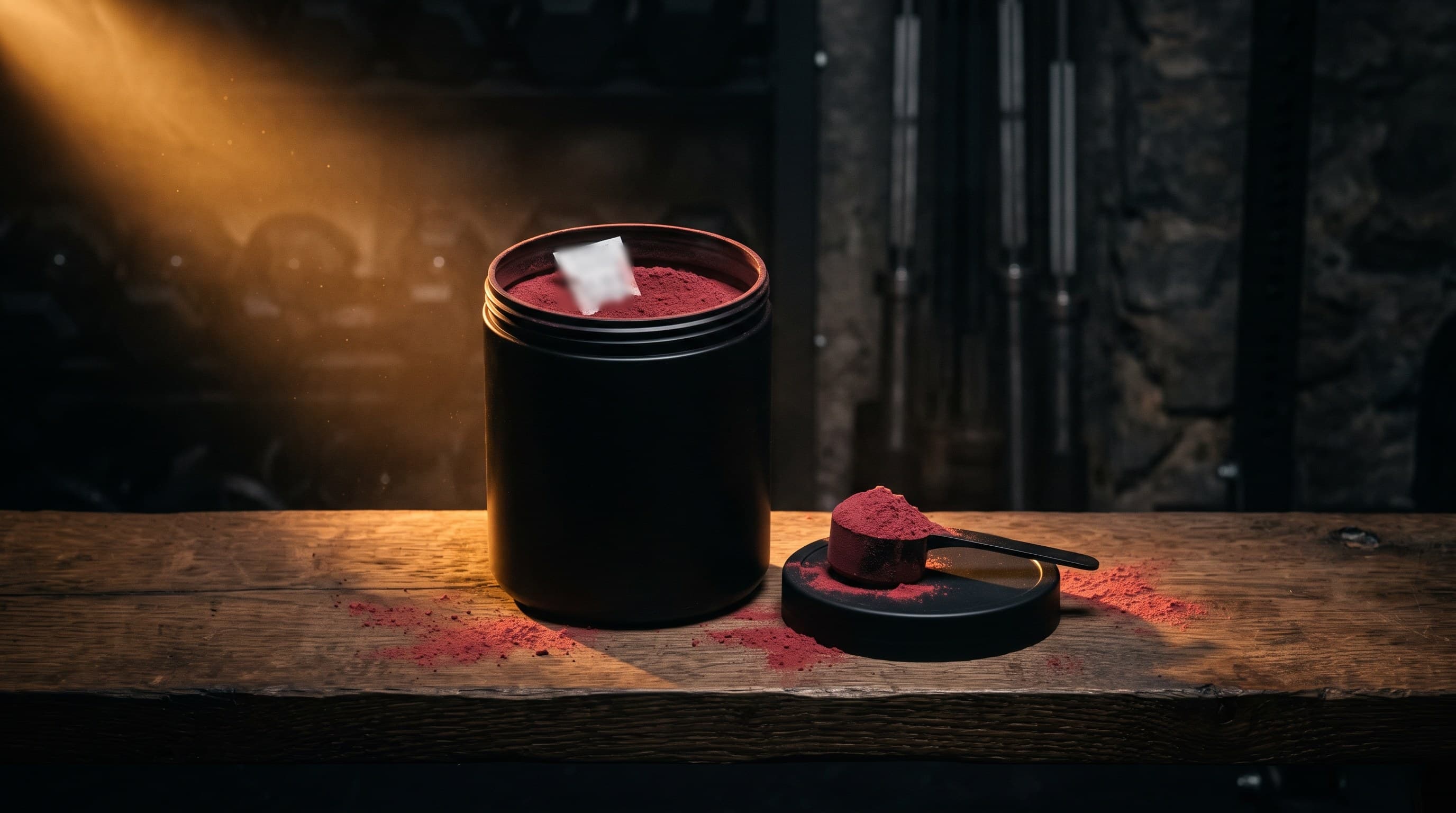
Pre-workout doesn't spoil the way milk does, but it doesn't stay the same forever either. What changes first is the powder, not the caffeine: moisture gets in, the hygroscopic ingredients pull it out of the air, and the more fragile ones start to break down. The date printed on a tub is the manufacturer's estimate of how long the product holds up on a shelf, and the law doesn't actually require a supplement to carry one at all. So the real answer to "is my tub still good" comes from the date, how the tub has been stored, and what you can see when you open it.
We get this question about half-used tubs more than new ones. Somebody took a few months off, found the tub at the back of a cabinet, and wants to know whether to finish it or bin it. Here's how we think about it.
What the date on a supplement tub actually means
Food and drugs work under different dating rules from supplements. When the FDA wrote its manufacturing rule for dietary supplements in 2007, it decided not to require an expiration date. Its position, stated in the rule itself, is that a company that does put a date on a product should have data to support that date, ideally from stability testing that shows how the product holds up under set storage conditions (72 FR 34752, the FDA's final cGMP rule for dietary supplements).
That has two practical consequences. A date on a tub is a manufacturer's claim, and how much it means depends on whether there's testing behind it. And the wording matters. "Best by" is a quality statement: the product is expected to meet its label through that date if it's stored as directed. Past it, the product doesn't flip into something else overnight, but nobody is standing behind it anymore either.
Storage is the other half of that sentence. Every shelf-life estimate assumes a closed tub in a cool, dry place. A tub that has lived next to a stove or in a hot car has had a harder life than the date assumes.
What breaks down in a pre-workout, and what doesn't
Not everything on a label ages at the same rate, and it's worth reading ours that way.
Caffeine anhydrous, at 400mg per full scoop, is a stable molecule in a dry powder. It isn't the first thing to go.
Vitamin C is the fragile one, and Gladiatore carries 1g of it per full scoop. Ascorbic acid in a powder breaks down faster as temperature and relative humidity rise, and the two together are worse than either alone. Food chemists at Purdue measured exactly that, running vitamin C powders through combinations of heat and humidity and tracking how fast it degraded (Hiatt, Taylor and Mauer, J Agric Food Chem, 2010). The same group showed that in powder blends, once the humidity gets high enough for an ingredient to start dissolving in the moisture it has pulled from the air, vitamin C stability drops sharply (Hiatt et al., J Agric Food Chem, 2008).
That second finding is the important one for a multi-ingredient tub. L-citrulline malate, betaine anhydrous, beta-alanine and sodium bicarbonate are all hygroscopic, which is why an open tub in a humid kitchen clumps. Clumping is the visible sign that water got in. Vitamin C is the ingredient that pays for it first.
Clumping on its own doesn't mean a tub has gone off
A tub that has gone hard is telling you about moisture, not about the date. We wrote the whole storage side of this up in why pre-workout clumps, and the short version is that a few soft clumps you can break with a spoon are normal in a powder this hygroscopic. A tub that has set into one solid brick has taken on a lot of water, and that's a different situation.
So clumping tells you about storage. It doesn't tell you the tub is past its date, and a loose, dry powder doesn't prove a tub is within it.
What to check on your own tub
- The date and the lot. Find whatever is printed on the tub. If it's past the best-by date, you're outside what anyone tested for.
- The seal and the lid. A tub that has been opened and closed for months has had more air through it than the date assumes.
- The texture. Soft clumps that break up are storage. A solid brick, a wet or sticky layer, or powder stuck hard to the walls means a lot of moisture got in.
- The colour and smell. Vitamin C that has degraded can shift a light powder toward yellow or tan. A smell that's sour, musty or just not what it was when you opened it is reason enough.
- How it mixes. If it no longer dissolves the way it used to, something about the powder has changed.
Our view is simple. If a tub is past its date, has set solid, has changed colour or smells off, don't take it. A replacement tub is cheaper than finding out. Inside the date, stored properly, with a powder that looks and smells the way it did on day one, it is the product on the label.
Keeping a tub good to the last scoop
Lid on tight the moment you've scooped. Dry scoop, every time. A cool, dark cabinet, not the counter by the kettle and not the gym bag. Keep the desiccant packet in the tub. If you train a few times a week, a tub gets used long before any of this matters. It's the tub that sits for a season that needs the check above.
The full label is on the ingredients page, and serving guidance is on how to use. Who a tub is for doesn't change with its age: adults 18 and over only, and not if you're pregnant or nursing, react strongly to stimulants, have a heart condition or take any medication. Keep to a single serving in a 24 hour window, leave other caffeine out of that window, and open a new tub at half a scoop.
These statements have not been evaluated by the Food and Drug Administration. This product is not intended to diagnose, treat, cure, or prevent any disease.